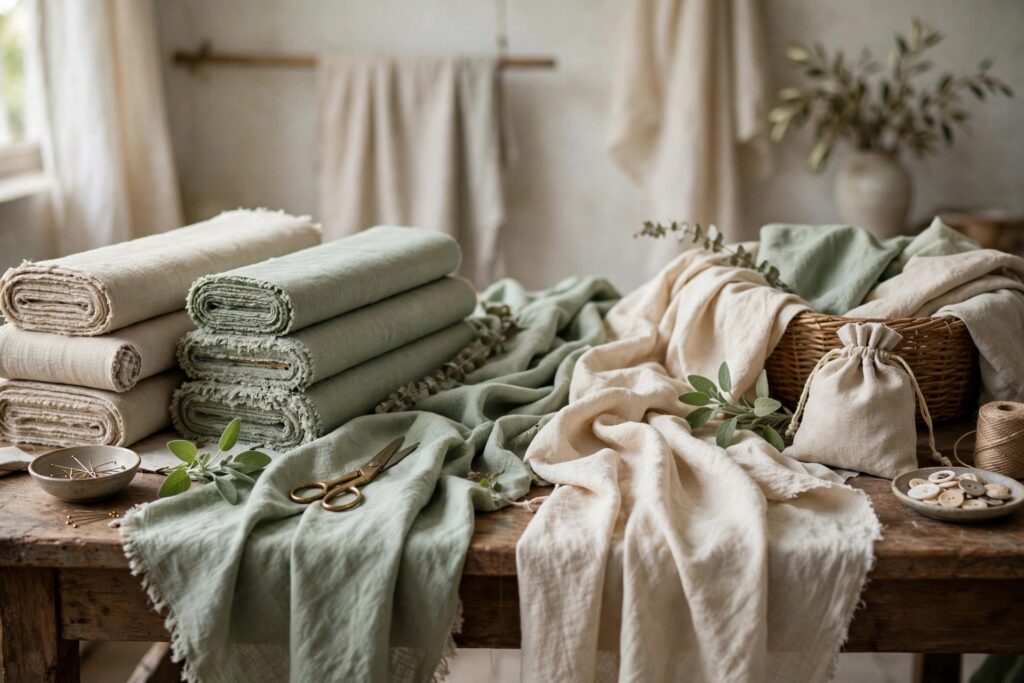
Fabric weight and drape decide whether a finished piece hangs softly, holds a clean line, or fights you at every seam. Weight is measured in GSM, drape is how the cloth falls in your hand, and choosing well means matching both to the garment or project you have planned.
Why weight and drape belong together
Two fabrics can share a fibre and still behave like strangers. A fine cotton voile floats. A cotton canvas stands almost on its own. The difference isn’t the plant they came from — it’s how much yarn sits in a given area, and how freely that yarn can bend and slide.
That’s why picking by fibre name alone disappoints so often. “Linen” tells you almost nothing about whether you’re holding a handkerchief-weight shirt cloth or a sturdy upholstery weave. You need two more facts: how heavy the cloth is, and how it falls.
Weight you can look up or measure. Drape you have to feel and learn to read. Together, they make fabric shopping far less like guesswork — a pattern’s suggested fabrics are really a weight-and-drape prescription in shorthand.
What fabric weight actually measures
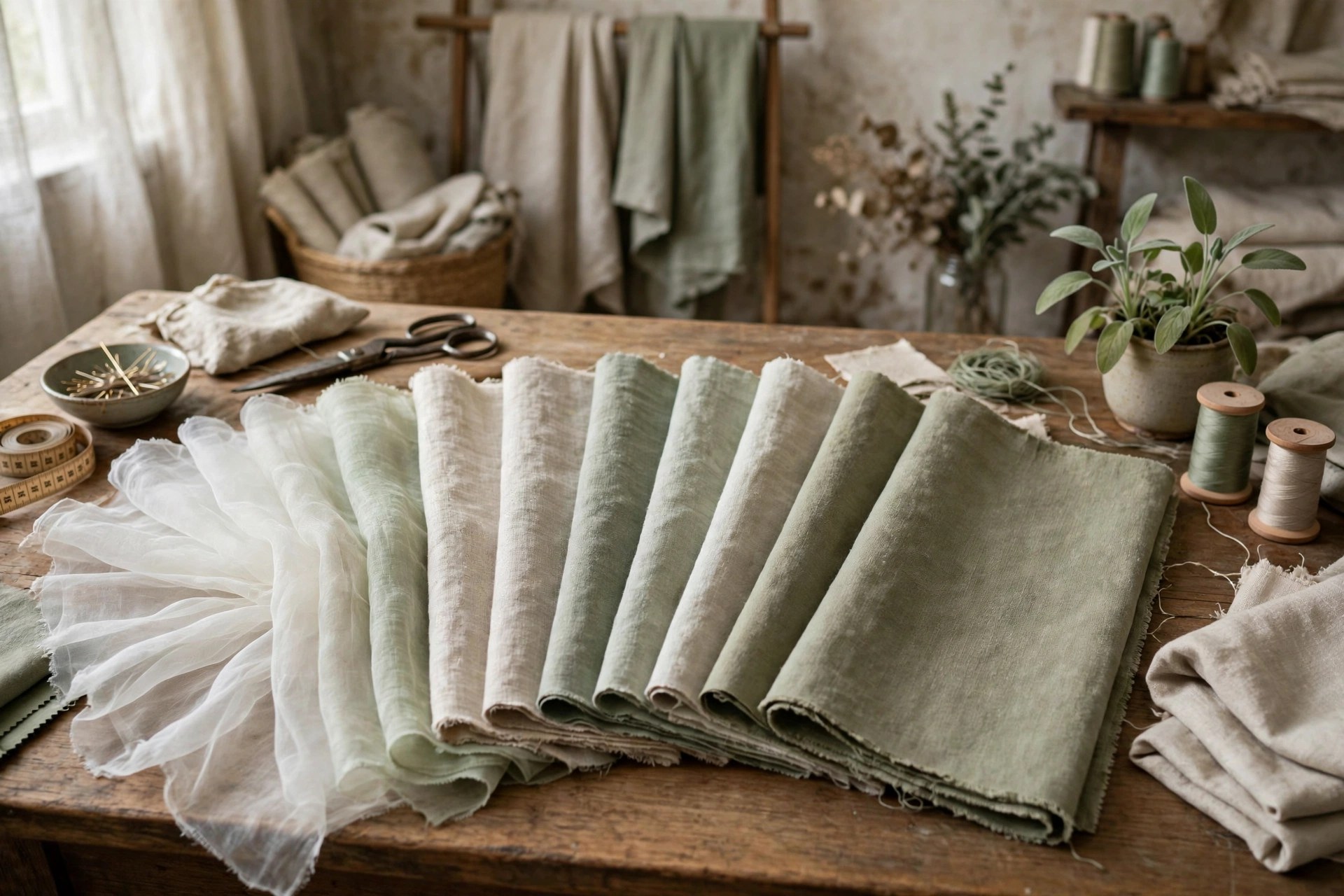
Fabric weight describes mass per unit area. The metric version is GSM — grams per square metre. One square metre of the cloth, cut out and placed on a scale, would weigh that many grams. Simple, if a little abstract until you’ve handled a few known examples.
The imperial version, still common on American bolts and in denim, is ounces per square yard, written oz/yd². As a straight unit conversion, 1 oz/yd² is about 33.9 g/m², so a fabric listed at 6 oz/yd² works out to roughly 203 GSM. Neither system is better. GSM tends to be more precise for light cloth, ounces feel natural for heavy work fabrics, and plenty of suppliers list both.
Weight isn’t thickness, exactly. A lofty wool coating can be thick yet light, because air trapped between fibres adds bulk without much mass. A dense silk satin can feel slim and still weigh more than you’d guess. Weight measures substance, not puffiness — and substance governs warmth, opacity, and how much punishment a seam will take.
The GSM bands, and what each one is for
Textile references commonly class fabric weights in broad bands, and shop staff tend to use the same groupings. Treat them as a map, not a law — a fabric near a boundary can serve on either side of it.
| Band | Weight | Typical uses |
|---|---|---|
| Sheer and very light | under 100 GSM | voile, organza, chiffon, fine lawn, veilings and linings |
| Light | 100–150 GSM | summer shirts, blouses, dress linings, light scarves |
| Medium-light | 150–200 GSM | dresses, shirts with more body, light trousers, quilting cottons near the top of the band |
| Medium | 200–300 GSM | trousers, skirts, structured dresses, light jackets, sturdy curtains |
| Medium-heavy | 300–400 GSM | denim, canvas, workwear, upholstery for light use, heavy drapes |
| Heavy | over 400 GSM | coatings, upholstery, bags, rugs and floor cloths |
Read the bands against your project. A summer dress cut from a 280 GSM cloth won’t move the way the pattern photo moves. Curtains in a 90 GSM voile will glow at a window and block almost nothing. Both are good fabrics — in the wrong jobs.
Denim shows the bands at work in one fibre family. Textile references commonly describe lighter denims, around 200–300 GSM, as shirt and dress weights, while classic jean weights sit higher. Same cotton twill — the number explains why one drapes over a shoulder and the other stands up in a leg.
Switching between the two systems mid-project? Use this fabric weight converter (GSM to oz/yd²) to turn a bolt-end figure into the units your pattern uses, so the cloth you buy matches the weight you planned for.
What drape means in the hand
Drape is the way fabric falls under its own weight. Does it pour? Does it fold in soft, rounded waves? Or does it crease into crisp angles and hold them, like paper? That behaviour — part fibre, part weave, part finish — decides the silhouette of anything you make.
Drape comes in three loose families. Fluid drape falls close and moves when you move — rayon challis, silk charmeuse, fine jersey. Softly structured drape keeps a gentle shape while still folding; most linen shirtings and cotton lawns live here. Crisp drape holds its own architecture — organza, taffeta, heavy canvas.
None of these is better than the others. A bias-cut skirt needs fluid cloth or it won’t swing. A pleated lampshade or a tailored collar needs crisp cloth or it won’t hold an edge. Trouble starts when the drape family and the design disagree, and no amount of careful stitching will talk them into agreeing.
Why two fabrics at the same weight drape differently
Here’s the puzzle beginners run into: two fabrics, both near 180 GSM, and one pours while the other stands. Weight alone can’t explain it. Three other things are at work.
Fibre
Some fibres bend easily and stay bent into soft folds. Rayon and silk are known for this willingness; fine wool bends and then springs partway back, which is why wool crepe drapes with a little life in it. Polyester can go either way depending on how it’s made. Stiff plant fibres and heavily sized cottons resist bending, so their folds stay wide and angular.
Weave
Yarns that float over several threads before interlacing, as in satin weaves, slide more freely and drape more fluidly. Plain weave locks yarns at every crossing, so it tends to be crisper at the same weight. Knits drape differently again — the looped structure stretches and collapses, which is why a jersey at a dress weight clings where a woven at the same GSM would skim.
Finish
What’s been done to the cloth after weaving changes its hand, sometimes a lot. Starch and sizing stiffen. Washing softens. Resin finishes can hold a fabric firmer than its weave suggests. A bolt can feel different after its first wash: the finish leaves, and the cloth’s own character shows up. If drape matters, pre-washing a sample tells you the truth sooner.
“Weight tells you how much fabric there is. Drape tells you what it wants to do. A good match happens when the cloth’s wishes and the pattern’s wishes are the same.”
Matching weight and drape to garments
Start from the silhouette, then work backwards to the cloth. Ask what the garment needs at three places: where it hangs from, through the body where it skims or clings, and at the hem, where movement shows most.
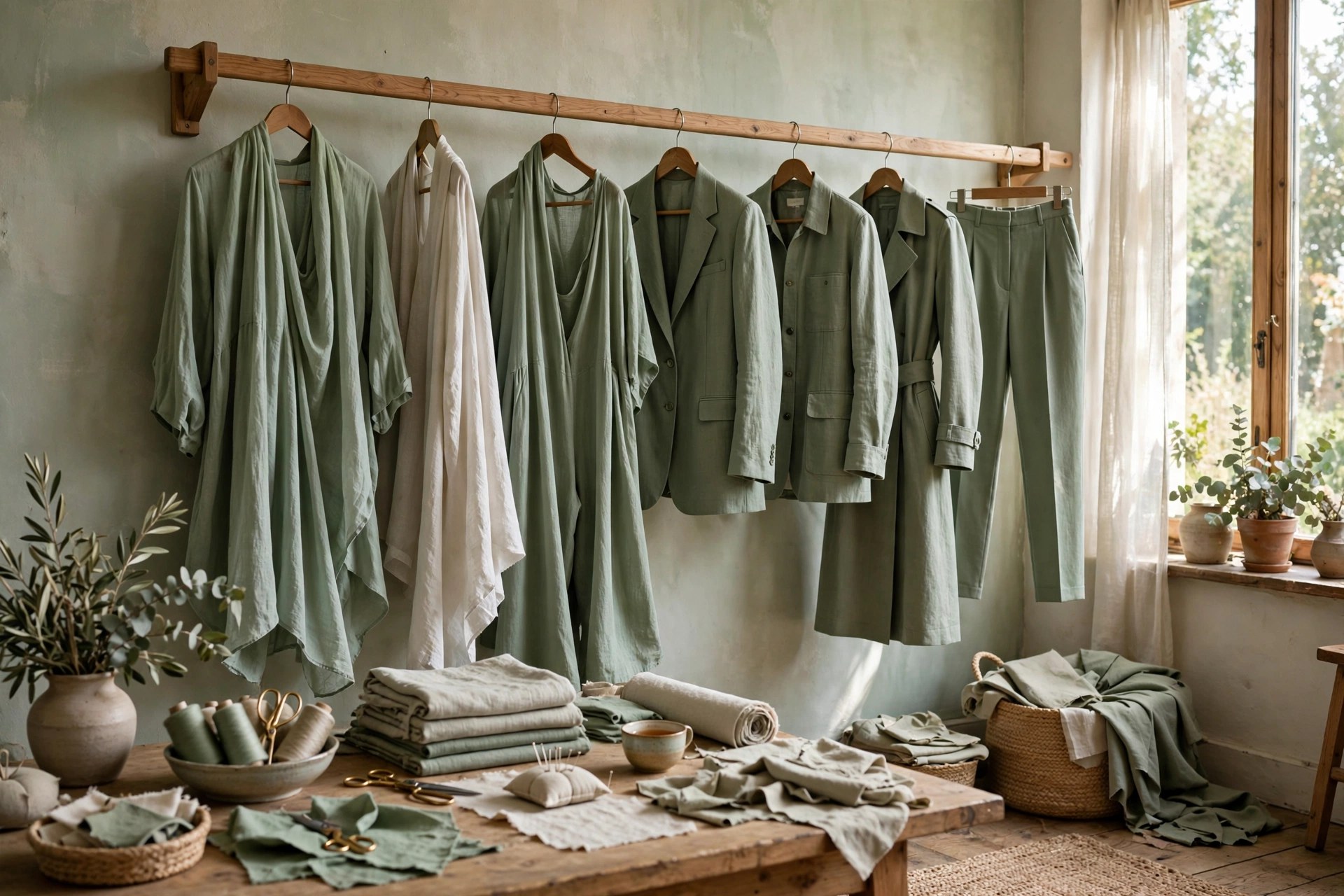
Dresses and skirts. Swing, flare, and gathers all ask for light to medium-light weights with fluid or softly structured drape. A-line and straight skirts forgive more body in the cloth — medium weights work, and a crisper drape can even be the point, holding the A shape away from the legs. Pencil skirts in very fluid fabric tend to collapse against the body and show every line underneath.
Shirts and blouses. Light bands suit most shirting, with drape deciding the mood. A lawn or voile blouse floats and layers well under jackets. A medium-light poplin or linen keeps a collar standing and a cuff crisp. If the pattern has soft gathers at a yoke, avoid crisp cloth — the gathers will poke rather than fold.
Trousers. Medium weights earn their keep here. Too light, and the fabric clings, wrinkles across the front, and wears thin at stress points. Too heavy without enough drape, and the legs feel like tubes. Wool and wool-blend trouserings in the medium band drape in that particular clean column most people picture when they picture good trousers.
Jackets and coats. Structure is the job, so medium-heavy to heavy weights with firmer drape make sense — but even here, an unlined summer jacket in a softly structured linen behaves nothing like a coating wool, and both are right for their season. Match the weight to the layer the garment occupies: the further out it sits, the more weight it can carry.
Matching weight and drape to home projects
Rooms ask the same questions as bodies, at a larger scale. A curtain is a hanging garment for a window: it drapes from a fixed point, moves in air currents, and its folds are the whole visual effect.
Curtains and drapes. Sheers live in the lightest band and filter light rather than block it. For full curtains, medium weights with softly structured or fluid drape fold into the deep, even waves most people want. Very crisp fabric makes shallow, angular folds that can look restless on a wide window. Very heavy fabric needs hardware that can honestly carry it — check the rod and brackets before the cloth, not after.
Upholstery and slipcovers. Here weight protects. Medium-heavy to heavy fabrics take abrasion and hold a fitted shape over foam. Drape matters less than toughness, except on loose slipcovers, where a softly structured cloth settles over arms and cushions without fighting. Save fluid fabrics for throws and cushions, where collapse is a virtue.
Quilts and table linens. Quilting cottons sit near the top of the light band into medium-light — they press crisply, piece accurately, and still fold into a quilt that wraps rather than stands. Table linens split two ways: fluid linen for a soft, pooled look, crisper cotton for a flat, formal one. They set different tables.
How to test drape in a shop
You don’t need equipment. You need a minute and a bit of unrolled cloth — most shops expect you to handle the bolts. Work through these checks in order.
Unroll more than you think you need. A corner pinched between two fingers tells you almost nothing. Ask for, or gently pull, at least half a metre off the bolt so the cloth can fall in real folds. Small swatches lie about drape because there’s no weight of fabric pulling the folds down.
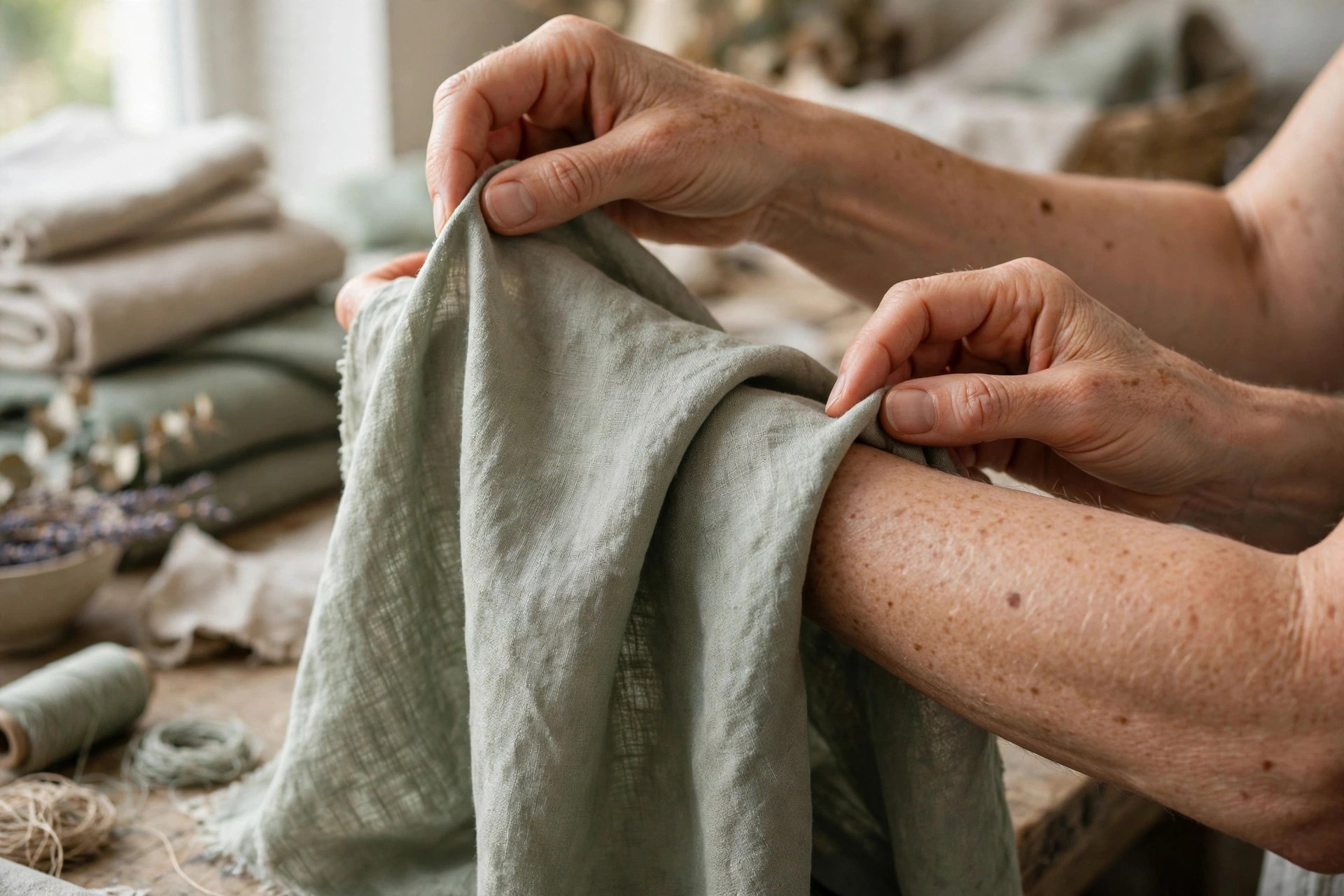
The forearm test. Lay the unrolled length across your forearm and let both ends fall. Watch the folds. Are they many and narrow, or few and wide? Narrow, plentiful folds point to fluid drape. Wide, stiff folds that angle away from your arm point to crisp drape. Soft rounded folds in between — you’ve got the middle family, the most versatile of the three.
The gather test. Scoop a handful of cloth up from below, as if the fabric were being gathered into a waistband or a curtain heading. Fluid cloth compresses into a small, soft bunch. Crisp cloth resists, springs back, and takes up room. If your project gathers anywhere, this test settles whether the folds will sit gracefully or bulk up.
Hold it to the light. Opacity is a weight clue you can check on the spot. Put your hand behind a single layer and face a window or lamp. If your fingers show clearly, plan on lining, doubling, or wearing something under it — or choose a different cloth for a garment that needs coverage.
Scrunch and release. Ball a section in your fist for a few seconds, then let go. It previews wrinkle behaviour — a fabric that drapes beautifully yet creases at a glance may be wrong for travel clothes. Linen creases honestly; some synthetics spring back almost unmarked.
Reading bolt labels and listings
The bolt end, or the online listing, usually carries four facts: fibre content, width, care, and — if you’re lucky — weight. Read them in that order; each narrows what the cloth can be.
Fibre content explains the character: how the fabric breathes, creases, and ages. Width decides your layout and whether pattern pieces fit side by side; a narrow width can quietly push a project into needing far more length. Care instructions matter before cutting, not after the first wash shrinks a finished garment.
Weight, when it’s given, may appear in either system. If a listing gives ounces and your pattern suggests GSM, convert before you compare: multiply ounces per square yard by 33.9 to get the GSM figure, as a plain unit conversion. And when weight isn’t listed at all, the fabric name often carries a hint — “handkerchief linen” signals the light end, “canvas” and “duck” the heavy end, “shirting” and “lawn” the light-to-medium range. Names aren’t measurements, though. If the project is expensive or unforgiving, order a swatch, or weigh a known area of a sample on a kitchen scale and work the number out yourself.
One more label habit: photograph the bolt end before you leave the shop. Months later, mid-project, you’ll want the fibre, width, and weight — and memory is a poor filing system.
Mistakes that weight and drape would have prevented
Most fabric regrets follow a short list of patterns. The stiff dress that was meant to swirl: a medium-weight cloth with crisp drape, cut in a fluid silhouette. The blouse that turned out see-through at the office: a beautiful light-band fabric, never held to the light. The curtains that hang like boards: upholstery-weight cloth on a window that needed folds.
Then there’s the reverse problem — cloth too light for its structure. Trousers in a shirting weight bag at the knee and shine at the seat. A tote in dress-weight cotton sags and tears at the handles. More substance generally means more resistance to abrasion, though weave and fibre quality share the credit.
And the quietest mistake: buying for the fabric you wish you had. A fluid silk is seductive on the bolt, but if your pattern wants architecture, put the silk back and buy it another day, for a pattern that wants to pour. Once cut, the argument between fabric and pattern is hard to settle.
A practical checklist before you buy
Run through this list at the bolt, or with a swatch in hand at home. It takes two minutes and prevents most mismatches.
- Name the silhouette first. Should the finished piece pour, skim, or stand? Write the word down if it helps.
- Find the weight. Read GSM or ounces off the bolt or listing; convert with the 33.9 factor if you need the other system.
- Check the band against the job. Light bands for float and layers, medium for most garments, medium-heavy and up for workwear, bags, and upholstery.
- Unroll half a metre. Never judge drape from a pinched corner or a small swatch alone.
- Do the forearm test. Count the folds: many and narrow means fluid, few and wide means crisp.
- Do the gather test if the design gathers, pleats, or ruches anywhere.
- Hold a single layer to the light and decide about lining or doubling now, not at the cutting table.
- Scrunch and release to preview creasing, and decide whether you can live with it.
- Read the whole label — fibre, width, care — and photograph the bolt end before you leave.
- Ask the pattern. Check its suggested fabrics against what you’re holding; the list is a weight-and-drape guide in disguise.
Do this a dozen times and it stops feeling like a checklist. Your hands learn the bands, your eye learns the folds — and shopping becomes a conversation between what a cloth wants to do and what you’ve come to make.
This article was created with AI assistance and reviewed by our editorial team before publishing.