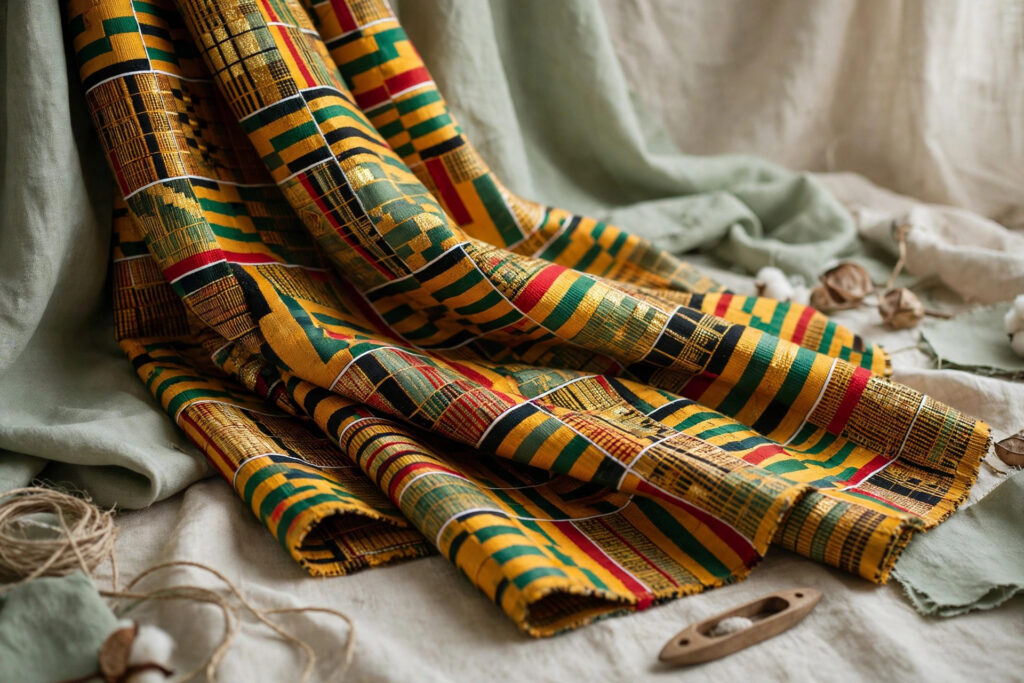
Kente cloth is Ghana’s handwoven strip cloth, and it was never just decoration. Woven in narrow bands and sewn edge to edge, its blocks of colour and named patterns communicate proverbs, social standing, and values like wisdom, unity, and spiritual strength — a message you wear rather than say aloud.
Where kente comes from
Kente belongs to southern Ghana, and two peoples are most closely tied to it. The Asante (also spelled Ashanti) centre their weaving on Bonwire, a town in the Ashanti Region that is widely regarded as the cloth’s birthplace. The Ewe, further east in the Volta Region, developed their own strong tradition around towns such as Kpetoe and Agbozume.
Those separate roots matter. Asante and Ewe weavers share the same basic technology — narrow strips, joined into a large cloth — but they grew up with different tastes, different stories, and different ways of picturing the world in thread. A cloth can often be placed, at a glance, by someone who knows those habits.
For a long time, the finest cloths were reserved for royalty and for the most serious occasions. Asante kings and queen mothers wore particular patterns that no one else was permitted to use, and some designs were woven only on royal command. That exclusivity has softened, but the respect hasn’t.
How a cloth is built, strip by strip
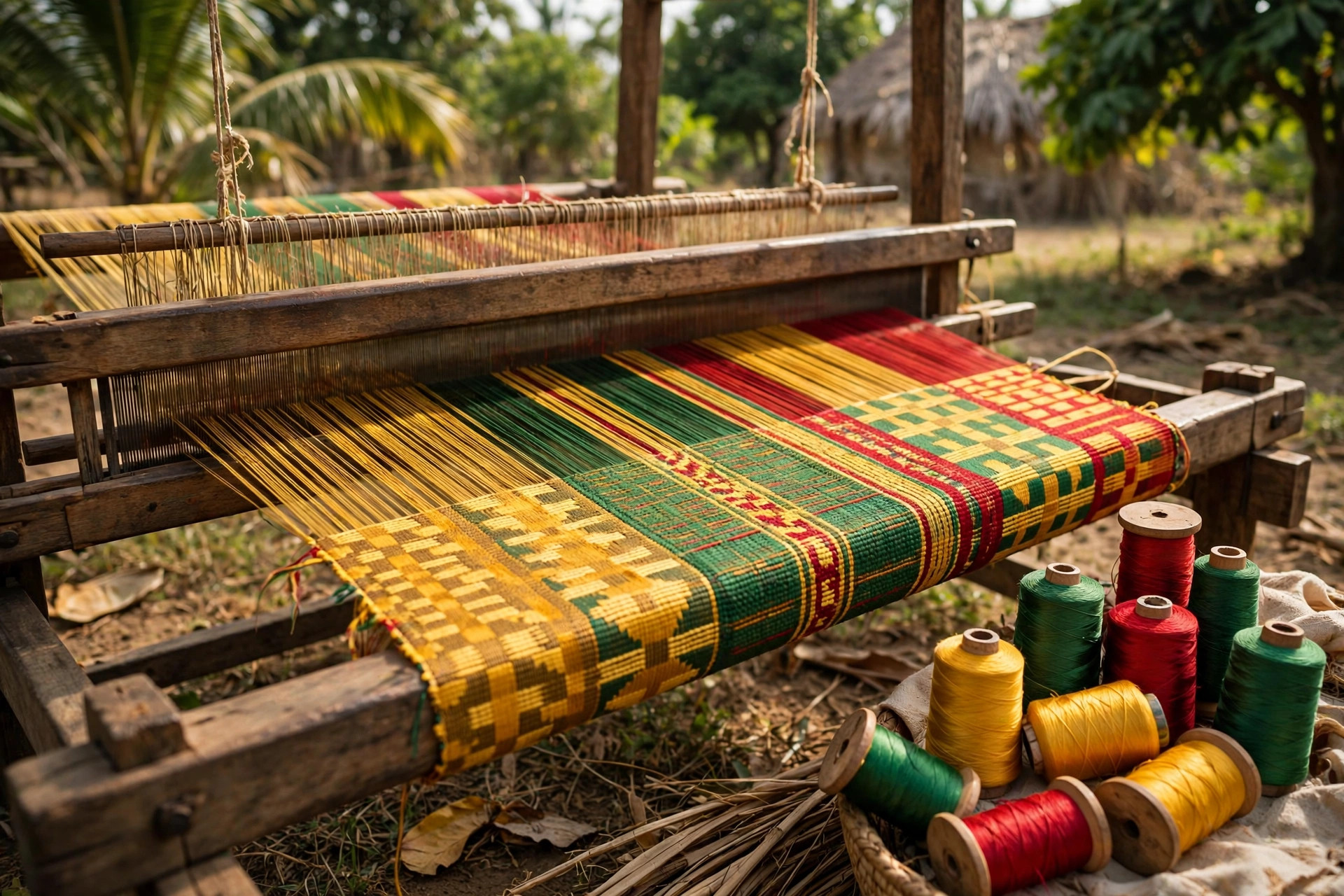
Nobody weaves a whole kente cloth in one piece. A weaver works on a horizontal loom and produces a long, narrow strip, roughly the width of a hand. Strip after strip comes off the loom, each one carrying its own repeating blocks of pattern.
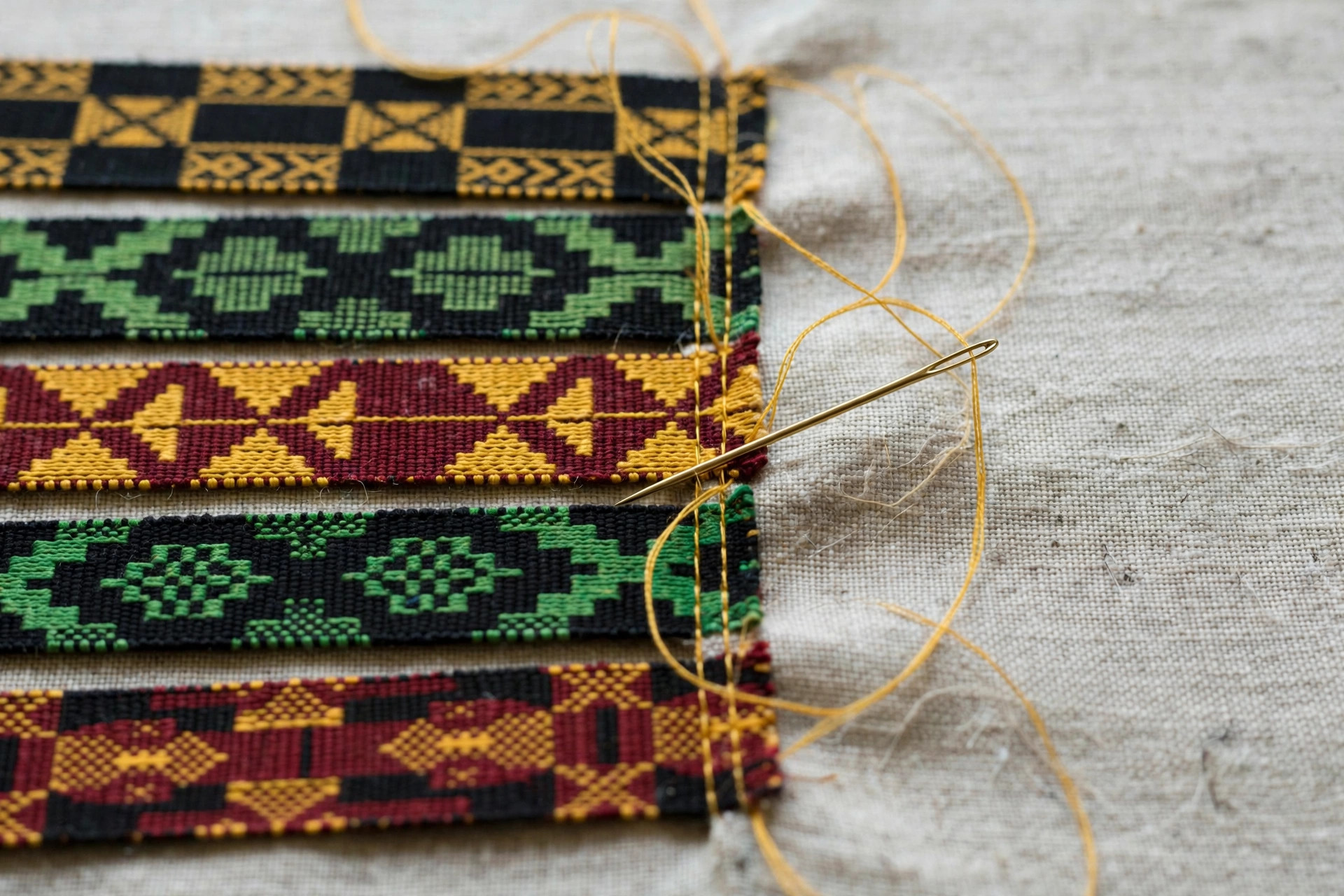
Then the sewing starts. The strips are stitched edge to edge, selvedge to selvedge, until they form a broad cloth large enough to wrap around the body. The joins aren’t hidden as flaws. They’re part of the rhythm — you can read a finished cloth the way you’d read lines on a page.
Traditionally, the threads were silk and cotton. Silk gave the cloth its sheen and its status, while cotton kept it grounded and wearable. Today you’ll also see rayon and other fibres, especially in cloth made for everyday sale, but handwoven silk-and-cotton pieces from established weaving towns still carry the most weight.
Colour is a language of its own
Colour in kente isn’t chosen because it looks pretty next to another colour, though weavers care deeply about that too. Each colour carries a meaning that Ghanaians in the tradition learn to recognise, and a wearer can build a quiet statement simply by choosing a palette.
Gold and yellow point to royalty, wealth, and spiritual purity — the colours of status and of things held precious. Green speaks of growth, renewal, and the harvest, the land coming back to life. Black, perhaps surprisingly to outside eyes, stands for maturation, intensified spiritual energy, and the wisdom that comes with age.
Red carries political and spiritual feeling, along with sacrifice and struggle. Blue suggests peace, harmony, and love. Purple is linked with the earth and with healing, while white and silver are tied to purification, joy, and celebration. No single cloth uses all of them at once. The selection is the sentence.
Patterns that carry proverbs
If colour is vocabulary, pattern is phrasing. Kente designs have names, and many of those names come from proverbs, historical events, or sayings that people in the community already know by heart. Choosing a pattern can be a way of quoting — politely, publicly, and without raising your voice.
Some famous examples make the idea clear. A design often translated as “one man does not rule a nation” argues for consultation and shared counsel instead of lone authority. Another, linked to the idea that knowledge and learning have no end, suits scholars and students. Others mark creativity, unity in diversity, or the memory of a particular chief or moment in Asante history.
That is why a thoughtful gift of kente is never generic. The giver picks a pattern whose name says something about the recipient — congratulations on an achievement, respect for an elder, encouragement before a hard task. The cloth does the talking, and everyone who can read it hears the message.
Asante and Ewe kente, side by side
The two traditions sit comfortably together in Ghana’s textile story, but they aren’t interchangeable. This quick comparison shows where they tend to differ.
| Feature | Asante kente | Ewe kente |
|---|---|---|
| Heartland towns | Bonwire, near Kumasi in the Ashanti Region | Kpetoe and Agbozume in the Volta Region |
| Loom and strip structure | Horizontal loom; narrow strips sewn edge to edge, with warp-patterned and weft-patterned blocks alternating in a regular, geometric rhythm | Horizontal loom; narrow strips sewn edge to edge, often with a looser, more open arrangement of blocks |
| Typical motifs | Bold geometric blocks and stripes; named patterns tied to proverbs, chiefs, and Asante history | Geometric blocks alongside figurative motifs — people, animals, stools, and everyday objects woven into the design |
| Traditional feel | Formal, symmetrical, and closely associated with royal dress | Expressive and pictorial, with room for storytelling figures |
Those are tendencies, not rules. Skilled weavers borrow, experiment, and respond to what a customer asks for, and modern cloth from either tradition can surprise you.
Who wears kente, and when
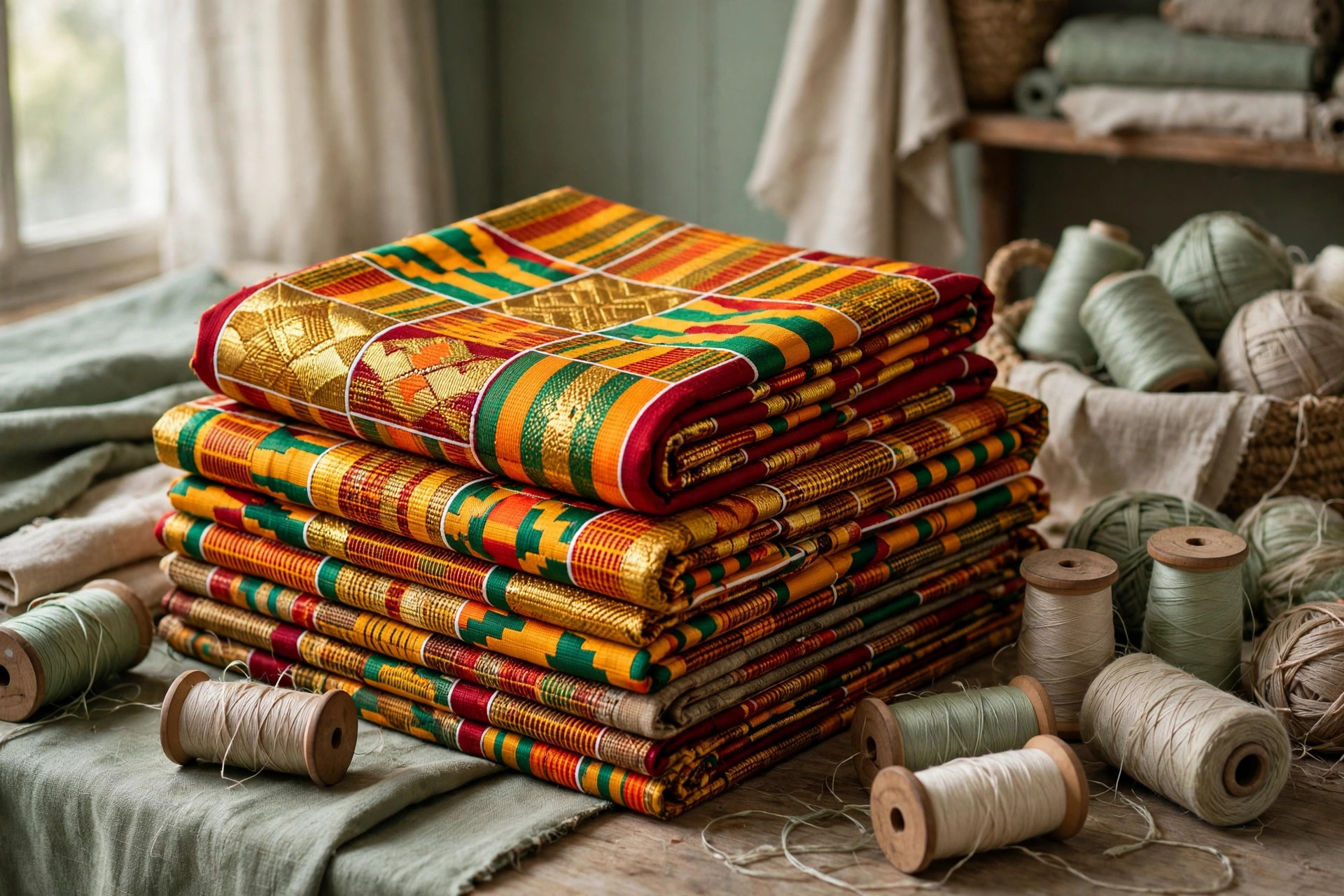
You’ll see kente at the moments Ghana marks most carefully: enstoolments of chiefs, festivals, funerals of elders, weddings, naming ceremonies, and graduations. Draped over one shoulder in the style of a toga, a large cloth makes a formal entrance all by itself. Smaller pieces appear as stoles, sashes, and trims.
Outside Ghana, kente has travelled widely. Graduates in the African diaspora wear kente stoles to honour heritage, and designers borrow its patterns for garments far from a loom in Bonwire. That spread brings a fair question about respect. Wearing genuine handwoven cloth, bought from its makers and worn with some understanding of its meanings, is a very different thing from printing the pattern on anything that will sell.
Price reflects that difference, and it should. A handwoven cloth represents weeks at a loom, strip by strip. Machine-printed fabric has its own place for everyday fashion, as long as nobody pretends it is the woven original.
Questions people ask about kente
Is kente only from Ghana?
Yes, kente as a named tradition is Ghanaian, developed by Asante and Ewe weavers in what is now southern and eastern Ghana. Other West African cultures have their own respected strip-weaving traditions, with different names, fibres, and meanings, but kente specifically belongs to Ghana.
Can anyone wear kente, or is it restricted?
Historically, certain patterns were reserved for Asante royalty, and a few still carry that association. Most cloth sold today is made for general wear at ceremonies and celebrations. The respectful approach is simple: buy real woven cloth where you can, learn what your pattern means, and wear it for occasions that merit it.
How can you tell handwoven kente from printed fabric?
Look at the structure. Handwoven kente is made of joined strips, so you can see and feel the seams running along the cloth, and the pattern is built into the weave on both sides. Printed fabric is a single flat piece of cloth with the design sitting on the surface.
What does it mean to give kente as a gift?
It usually means the giver chose deliberately. Because patterns carry names and proverb-linked meanings, a gifted cloth can congratulate, honour, encourage, or thank — depending on the design selected. Ask the seller what a pattern is called and what it says. A good weaving shop will be glad to explain.
This article was created with AI assistance and reviewed by our editorial team before publishing.